Tripod Foot Issues with Canon 500mm/f4 II
I just turned over my beloved Canon 500mm/f4 L IS USM lens for the Series II version. I've only had it for a couple of days but the first thing I did was to add a tripod foot that has the Arca-Swiss groove in it. These are made by Wimberly, Really Right Stuff, Kirk, and a few others. I chose the Kirk version because of the nice grip surface they offer for hand carrying. The one I had on my earlier version was always slippery.
Here is the 500 mounted on my gimbal head with the original foot and a short plate added. It is not balanced at all and needs to move at least another inch.


True to Kirk products, this is beautiful. Very well made and easy to install (sorta). It comes with a very nice T-handle wrench that you can add to your tool collection. The ONLY issue I have with it is that it merely copies a very poor design by Canon. Since the 500mm/f4 Series II lens is so much lighter than the Series I, especially in the front, the foot should have been located more rearward. I guess Canon decided to let the end users add their own plates. The Kirk design replicates the Canon design for the most part. Although it does add a little extra foot rearward, it is not enough to obtain a proper balance of the lens and body when using a gimbal.
With the Kirk design, you have to slide extremely far forward, with very little engagement, in order to balance. And with the 2x extender, you must remove one of the stop screws to make it work.

The remedy here is to mount the Kirk foot in reverse so that you have enough room to slide forward on your mount. Note that the mounting plate has a step and you must install enough washers on two of the screws to keep the them from bottoming out and preventing the collar from rotating.
Here is a Canon 1Dx MkII with no extender.

Here is a Canon 1Dx MkII with a 2x extender.

So, it will work for me, but Canon put out a poor design in the beginning and Kirk merely improved on their design by a very small margin. Note that Really Right Stuff and Wimberly make products that have the same foot shape and location and are therefore no better.
If you decide to replace your foot, I would suggest putting a small amount of thread lock on all of the screws so they don't work loose.
If Kirk (and the others) had made their feet extend to the rearward about 2", it would be a five-star product. I wouldn't be complaining if I had gotten it from Wal-Mart or some bargain shop, but Kirk (and Canon), we expect better than this.
Using Nikon Lenses on Canon Bodies
Many of my fellow photographers know that I don't get wrapped up in the brand wars. In fact, I got my feet wet on Minoltas before moving to Nikons and then to my current investment of Canon gear. I have a small collection of various gear, some I used and some I just picked up, on display in a cabinet in my home. It basically collects dust and occasionally gets pulled out for some specific discussion or some reflection of days gone by behind the viewfinder.

I recently saw a product that caught my eye. It's an adapter that allows one to mount Nikon F-mount lenses onto Canon EOS-mount bodies. While you lose all electrical connectivity, including auto focus, it offers an inexpensive way to get some use out of some of the best glass ever offered to the consumer photography market. And because the Nikon mount is smaller in diameter than that of Canon, it allows the lenses to sit in the correct location so you don't lose your infinity focus. You can't just throw a lens in front of a camera body or else you end up with the same effect of adding an extension tube. You have to get closer to focus at the expense of losing your infinity.

So, being the experimenter that I am, I ordered one of these adapters and went out for some test shots. Above is the screenshot from B&H, where I purchased the adapter.
In use, it's pretty simple. The ring first attaches to the rear of a lens with a Nikon mount and locks into place. You have to remember that Nikon lenses load backwards you you have to twist in a counter-clockwise direction. I read about some similar products that lock on even more securely with a set screw. The assembly then attaches to your Canon body like any other lens.
The lens I chose for the test was an old Nikkor 500mm/f8 mirror lens that was produced between 1968 and 1983. Optically, this is an amazing lens but in use, it's pretty limiting because there are no auto focus versions or any that have any sort of image stabilization, something really needed in a lens this long. But it's so crazy light and compact and because it uses mirrors rather than lenses, there is no chromatic aberration which means the images are quite sharp.

There wasn't much to the test. It worked as advertised. Manually overriding an auto-focus lens is a whole lot easier than trying to do 100% of the focusing. And because there is no electrical connection between the lens and the body, one much use one of the automatic modes or fully manual. I chose my usual shutter priority.

Focusing was tough - just like in my early days. So, why did I choose birds in flight? Just out of habit I guess. In the end however it all worked fine. The images are virtually indistinguishable from those I took alongside with my 500mm prime.

In this final example, I an using an old 60mm Nikon micro lens on my 1Dx.

So, consider one of these simple and inexpensive gadgets if you happen to have oddball lenses laying around that you may want to use. It's a shame that so much good glass is just not getting used anymore and so much of it is really inexpensive to purchase.
To use Image Stabilization or not
Just as the question of whether one should protect their lenses with UV or clear filters has been one of opinion rather than fact, my experience has been that when shooting with tripod-mounted supertelephoto lenses that have Image Stabilization or IS (Vibration Reduction or VR for the Nikon world), in the image quality department, is equally based on opinion rather than fact. I for one, like to do real world tests, as I have done on the use of extenders (teleconverters), and when comparing different lenses and such. This is one such real world test on IS.
For a little background, it's been clearly a rule of thumb, and even printed in instruction manuals, that when using a lens on a tripod, you always turn of the stabilization. My experience with several super telephoto lenses shows the contrary - that it is either better to leave it on or there is no degradation to the image by leaving it on. Furthermore, the ability to keep the focus point on target, something very tricky when trying to focus on a single eye for example, is highly aided by the use of a stabilized image.
My experience has been that for lenses like the 500, 600, and 800mm supertelephotos, that are either too heavy to hold reasonably steady and whose narrow angle of view is such that even your pulse of blood through your arms will cause movement, it is best to leave it on all the time. The logic is that if these are really not hand holdable lenses by design (turn off your muscle-man mode for a moment) and therefore designed for tripod use only, and if you are supposed to turn off the stabilization when using a tripod, why would they even have some form of image stabilization at all?
I have never seen a case where the IS has caused any issues in my image quality, but being the experimenter that I am, I decided to perform a little test while I was waiting for a bald eagle to do something other than just sit on a branch and use up my memory card with duplicate images. So I shot some identical images with and without the stabilization engaged and have presented them here for your study.

This is the test image, uncropped. I used a Canon 7D MkII with a Canon 500mm/f4 IS lens, and a Series III 2x extender with the IS engaged. The lens was mounted on a heavy Really Right Stuff carbon tripod using a heavy gimbal head. This is my normal shooting setup. I followed up with a second set of shots but with the IS turned off. Exposures for both sets of images were identical since I shot in manual and the images were taken merely seconds from one another. They were tan in RAW and processed with identical values including my usual noise reduction and sharpening.

I laid heavily cropped portions side by side and then included the 100% crops. I cannot tell any difference in quality between the two images. I don't think that use of IS adds or detracts from the final image quality. I have experienced this for several years but this is the first time I have done an actual experiment with two identical scenes. I will add that for the first version of this lens at least, the IS noise gets picked up on the internal microphone when shooting video and it's quite annoying. So I turn it off when I shoot the occasional video, if I remember to that is.
I have shot with both the original and the Series II 600mm/f4 as well as the 800mm/f5.6, and have come away with the same conclusion: there is no apparent, real-world difference between using stabilization or not on these supertelephoto lenses when using typical shutter speeds for wildlife. Some may argue that for longer exposures, the stabilization may become a factor, but in my experience, other factors, even a very slight breeze, is more than enough to cause the entire camera system to move.
If your experience is different, I'd love to hear from you. I only present this to show what my experience has been by presenting specific examples.
Wildlife Ethics
Crowd around a robin or try to feed a pigeon and no one will care. Throw a stick at a snake or swat a spider and you will hear no complaint. But come within 500mm lens range of barred owl or a family of foxes and someone is sure to have a fit, both for good reason...and none at all.
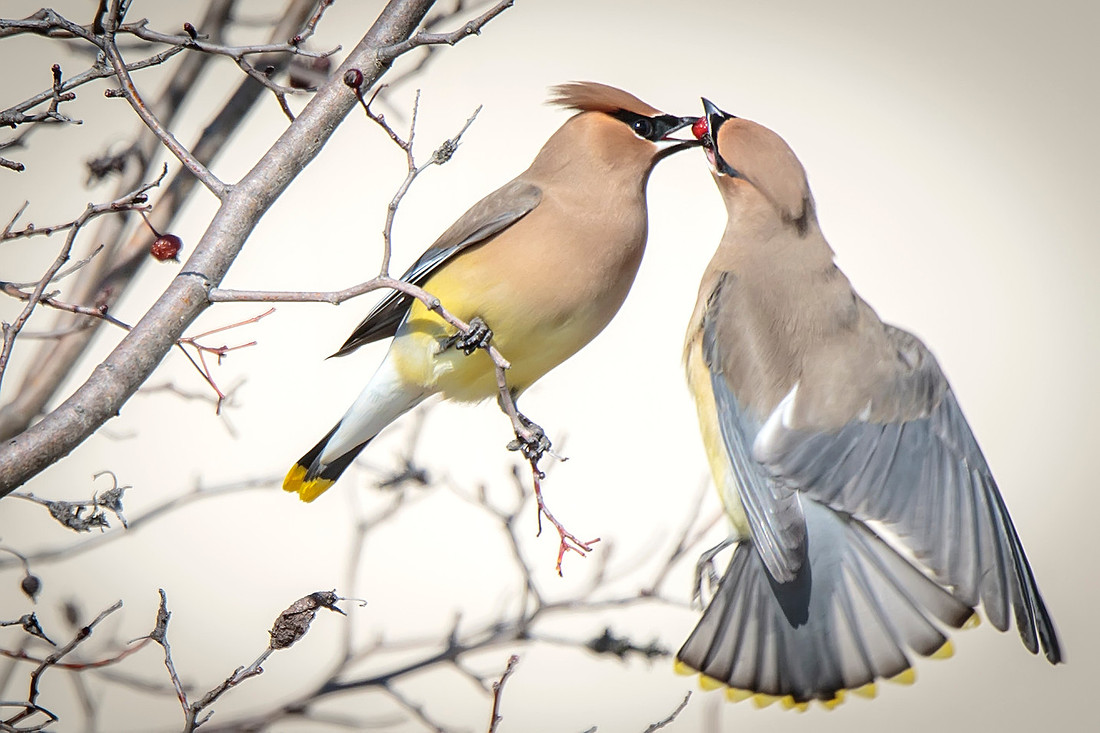
It's spring time and there are nests and nestlings, gooses and goslings, and all sorts of mothers and motherings. It's a great time to be a wildlife photographer. And with Facebook and the many posts we make sharing our finds, there comes a time when we have to give some thought to giving out locations of the more sensitive critters, realizing that some are more reactive to our presence than others.

Like all wildlife photographer should do, I try to learn a little about what I am stalking and eventually shooting before I get out in the field. While many animals are not bothered by the presence of people, some will take flight as soon as they see a vertical creature. And then there are those that we need to approach more carefully and in a non-threatening manner. This approach could take minutes, hours, or days. I usually start by making a slow approach that is not directly at the subject of interest but I try to keep a distance while watching its response to my presence. If it seems comfortable, I will approach it a little closer, usually not making eye contact. If I see an unfavorable response then I will either stop or retreat. In most cases, within a few minutes, I have gained a comfortable rapport and can begin gearing up for the shots.
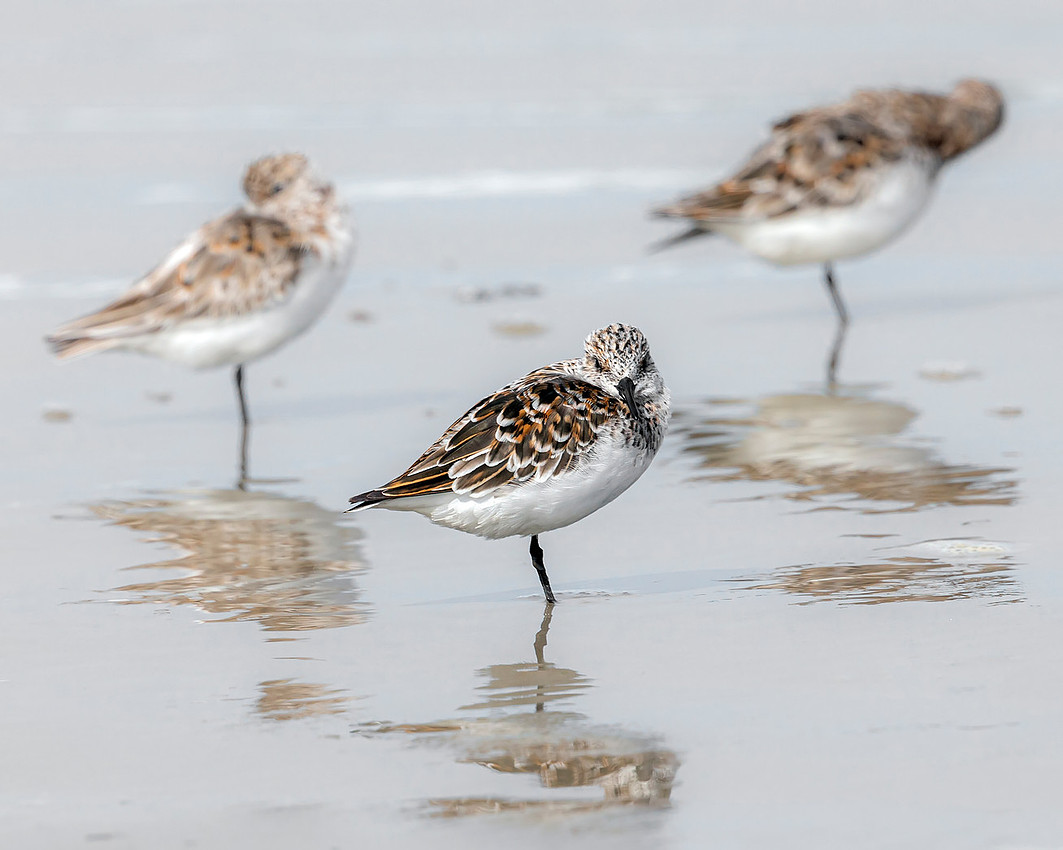
I like to share findings with friends and especially other photographers, some of whom may want to get some shots as well. For most of the usual subjects like osprey, eagles, shorebirds and the more common wildlife, I usually post photos later in the day and give pretty specific locations. Or I might call or message fellow photographers and invite them out to join me. But for the more sensitive wildlife, those which may run off, relocate, or those where I may interfere with their normal activities of catching prey, finding a mate, building a nest, or raising their young, I am not so public with my findings or I will not share my photos or information until after the opportunity has passed. As a wildlife photographer, I have a lot of respect for what I am capturing and I will make sure that my behaviors will not impact it. But as much as we all try to protect wildlife while also capturing it, we are bound to run across others who are either overprotective or who don't share the same respect.
I got a really nice series of shots of a barred owl, in one of the local parks, over a period of several days. Owls are pretty cherished to shoot because they can be so hard to find. And of course with a crowd of photographers all clicking away at one time, it's possible to make a deleterious impact on them, often without even realizing it. Barred owls however are quite comfortable around people and in this case, a mated pair had set up a nest in the hollow of a tree, right at the edge of a very busy hiking/jogging trail, replete with dogs and relatively loud portable music devices. For days they flew between the tree and the bog, collecting food for their young, while we all enjoyed getting great shots of them in flight, capturing prey, or just posing.

It was only a matter of time before someone had reported that photographers were collecting around these poor owls and threatening them with their presence. Although I never saw any evidence of that, eventually the area was roped off and no one was allowed to stop for photos. Of course the barking dogs, chatty hikers, and noisy music players were allowed to continue. Sometimes you can help educate those who come by to inquire but in other cases, you are stuck with people who don't care about knowledge and just make decisions with no recourse.

A more recent case is that of a den of red foxes with young kits that was close to a walking area. After security guards noticed that a few photographers were gathering for photos, one of them became concerned that we were drawing attention to them which might attract others who would be tempted to get much closer for shots with smaller cameras and cell phones and may even try to pet or feed them. About all you can do in these cases is comply and be decent about it. In an attempt to help keep the crowd of photographers at a minimum, I chose to not share the location of my photos and even wait to post them to the local public. And once I got the photos I wanted, I decided I was not going to return, allowing space for other photographers in order to lessen the crowding.

The problem of people getting too close to wildlife is not only a problem for the wildlife, but in many cases it can be dangerous or deadly for the people. The national parks where large wild game are seen are especially prone to injuries and occasional deaths from wildlife. During my trip to Yellowstone I saw plenty of people who ignored the warnings and got too close to wildlife, primarily the bison. I never saw anyone get injured but these people got a lot closer than I was willing to get and I considered them lucky. Bison especially, can be unpredictable and can close the gap before you realize you are in trouble.

I use approrpiate lenses in order to get the shots I want without having to get too close to my subjects, either for the safety of the wildlife or for my own. But even more important is keeping wildlife wild. I don't ever want to let my desire for a shot become more important than the safety and well being of what I enjoy so much.
Cropped versus Full Frame Bodies

When I'm shooting wildlife, my needs change and so do my tools. I'm usually shooting from a tripod and at a higher shutter speed but I am usually shooting under a lot more light. My ISO values may still be somewhat high because of the slower aperture of supertelephoto lenses, often with teleconverters added to them, and the desire to stop action. But a scene at ISO 8000 outside and during the day is a lot more cooperative for suppressing noise than one in a dark concert arena.
For added reach, and when I have plenty of light, my go-to body is my cropped 7D MkII. While some complain about noisy results, I find that I can get beautiful images pretty consistently. Consider this image taken at ISO 1600 and f8 with a 2x teleconverter.

When shooting early in the morning, under heavily overcast skies, or in otherwise subdued light, my tool becomes the 1Dx or now the 1Dx MkII. I found that the older body we pretty comparable to the cropped 7D MkII at ISOs below 3200. But now with the newer MkII model, the ability to turn off the anti-aliasing filter improves my sharpness substantially. But even its performance has its limits as I shoot smaller and/or more distant subjects where the 1.6 crop factor becomes as advantage with the older 7D MkII. I believe the jury is still out about at what ISO the tradeoff becomes with the newer body. It may be that the sharpness gain and lower noise outweigh that 60% extra reach.
But for the more affordable full frame bodies like the 5D and 6D series, my experience shows that they are equal partners with the 7D MkII in the image quality department and the latter should be considered as a great companion for much general purpose and especially wildlife photography that many of us enjoy.